
Do Tinnitus Apps Work? What They Help With and Their Limits
Download Now.


THI = Tinnitus Handicap Inventory. TFI = Tinnitus Functional Index. TQ = Tinnitus Questionnaire. MARS = Mobile App Rating Scale. Sources: peer-reviewed systematic reviews and RCTs; see sources below.
Why consistency predicts results more than features
The single strongest predictor of meaningful THI/TFI improvement across tinnitus app trials is not which sounds are available — it is whether the app was actually used consistently, every day.
The adherence threshold
Trials linking app use to meaningful outcomes generally find a threshold around 30+ minutes of daily sound exposure. Below that threshold, distress scores rarely show clinically meaningful change.
Why background play changes this
If sound stops every time you receive a call, join a meeting, or lock your phone, you cannot hit the daily threshold without effort. Background playback through all of those moments is what makes reaching 30–60+ minutes realistic without changing behaviour.
What apps can and cannot do
Apps can:
- Reduce the silence contrast that amplifies tinnitus perception
- Support consistent sound enrichment across work, calls, and sleep
- Reduce emotional distress and improve sleep scores over time
- Provide crisis tools during acute spikes (see the emergency protocol)
- Support the acoustic conditions in which habituation can develop
Apps cannot:
- Cure tinnitus or address its underlying cause
- Diagnose tinnitus, hearing loss, or medical causes
- Replace professional evaluation for new, sudden, or worsening symptoms
- Guarantee results — individual response varies significantly
- Substitute for clinical support in severe or treatment-resistant cases
How to try a tinnitus app and evaluate it properly
Most people judge an app within the first few days — too early to see meaningful results. Here's a more evidence-aligned evaluation approach:
- Set volume below tinnitus level — faintly audible through the sound, not covered. This is sound enrichment, not masking, and produces better long-term outcomes.
- Try each sound for 3–7 days before switching. First-day impressions are unreliable — your brain needs exposure to begin reclassifying a sound as neutral.
- Use it overnight if possible — sleep is where most trials show the earliest measurable improvement. All-night use is safe at comfortable volume.
- Track a simple weekly distress score (0–10) rather than daily. Daily fluctuations are misleading. Weekly averages over 4–8 weeks reveal the actual trend.
- Evaluate at 8 and 12 weeks — not at 3 days. If distress score hasn't moved at 12 weeks with consistent use, consider professional support.
- Stop if you notice discomfort, increased sensitivity, or worsening symptoms and seek professional evaluation if those persist.
If symptoms are new, sudden, one-sided, pulsatile, or accompanied by dizziness or hearing loss — seek professional evaluation before starting any self-managed sound programme.
Tinnitus Relief App — an example of this in practice
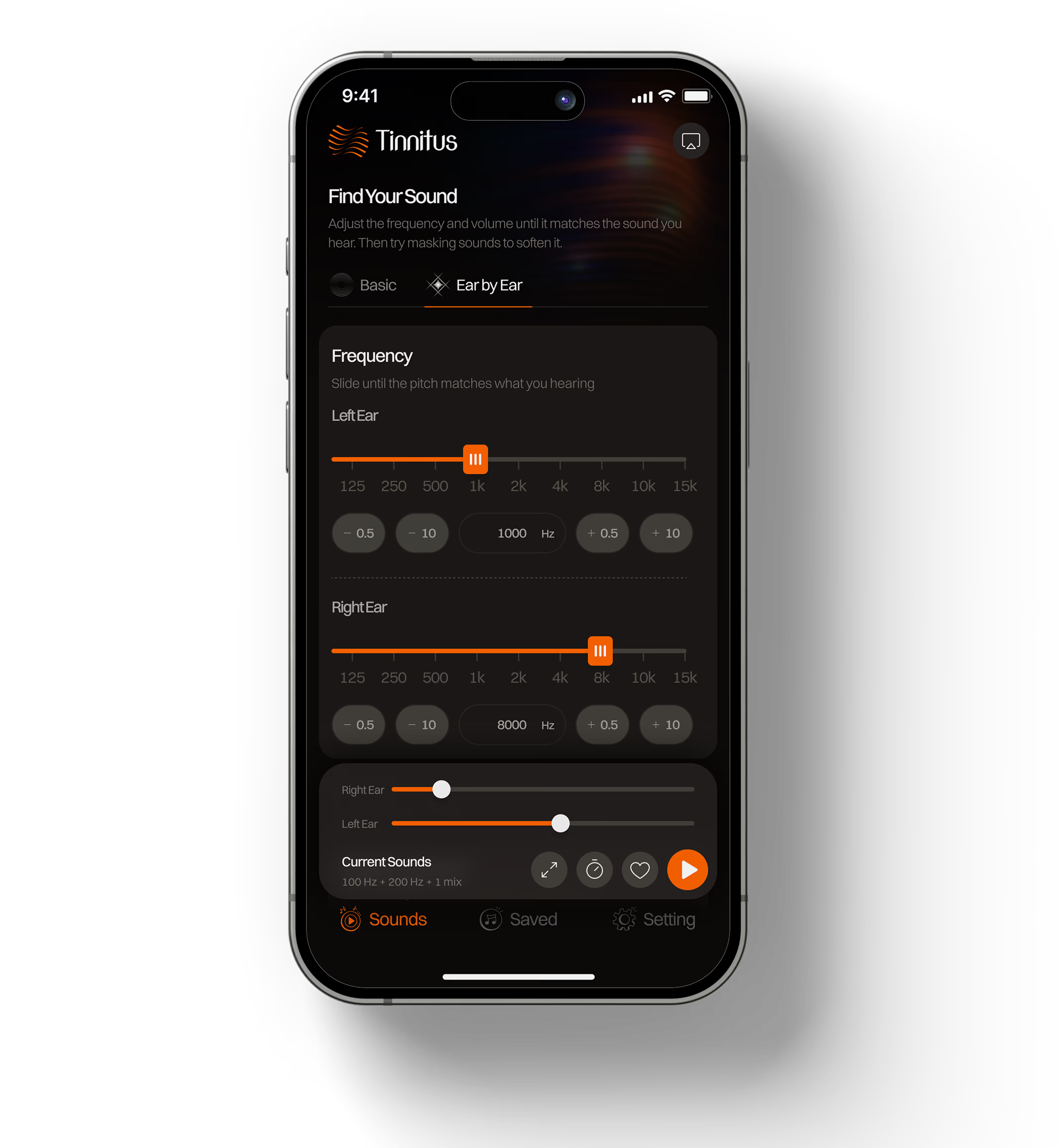
Tinnitus Relief App is a non-clinical sound therapy tool built around the adherence problem. Its core design principle: if sound stops when you get a phone call, you won't keep using it.
- Background play continues during calls, Zoom, YouTube, and a locked screen
- 44 sounds across 6 categories — free tier includes white noise and pink noise
- No account required, fully offline after first load
- Not a medical device — does not diagnose, treat, or cure any condition
Sources
- ReSound Relief app RCT: THI 54→35, TFI 51→37 over 6 months; clinically meaningful improvement in 54–58% of users. PubMed Central.
- Systematic review of tinnitus apps: approximately 7/34 evaluated apps had formal efficacy evidence; MARS usability scores. mHealth JMIR.
- Kalmeda CBT-integrated app: significant TQ and PHQ-9 reductions vs control; reimbursed in Germany. PLOS ONE / JMIR.
- 2026 telerehabilitation review: self-help apps effective for TFI distress reduction in mild-to-moderate tinnitus. JMIR.
- ASHA Tinnitus Triage Guidelines: red-flag criteria for urgent audiological evaluation.
Use comfortable listening levels and take regular breaks. This content is general information and not a substitute for medical advice or professional tinnitus management. Tinnitus Relief App is not a medical device and does not diagnose, treat, cure, or prevent any medical condition. Results vary by individual and adherence.