Free Tinnitus Sound Generator — White, Pink, Brown & Green Noise

VIDEO CALL ACTIVE
4,200
Hz Masking
BACKGROUND RELIEF
⏱ 8 min read · Updated March 2026 · Reviewed by the Tinnitus Relief App team

Hear each noise colour right now — no download, no account. Then learn which sound works best for your type of tinnitus, how loud to set it, and what the app does that a browser never can.

If your ears are ringing right now, you're in the right place.

Tinnitus — the persistent ringing, hissing, buzzing, or humming that only you can hear — affects an estimated 15% of adults globally. For many, silence makes it worse. The moment background noise drops away, the ringing takes over.

Sound therapy works by giving your auditory system something else to focus on. This page lets you try it immediately, understand the science behind it, and find the sound that fits your tinnitus pitch.

If you need the sound to keep playing during phone calls, sleep, or while using other apps — that's what the app is built for.

Try each sound — free in your browser
Volume 38%

Tip: Set volume so tinnitus is still faintly audible — partial coverage works better than full masking

Select a colour above, then press Play

This player stops when you switch apps or take a call. For continuous background play during phone calls, Zoom, YouTube, and a locked screen — download the app. That's the one thing a browser can't do, and it's the app's defining feature.

Why Sound Therapy Works for Tinnitus

Tinnitus is generated inside the brain — not in the ear itself. When the auditory system stops receiving normal sound input, the brain sometimes turns up its own internal volume to compensate, producing phantom sounds. Sound therapy works by giving the auditory system an external signal to process alongside the tinnitus.

Two mechanisms explain why many people experience relief:

Partial masking — reducing awareness

Background sound makes tinnitus less audible and less noticeable in the moment. At the right volume, the ringing becomes part of a richer sound environment rather than the only thing in silence.

Habituation — reducing the brain's response

Over time and with consistent exposure, the brain learns to classify tinnitus as a neutral, non-threatening signal. Research on tinnitus retraining therapy (TRT) suggests that long-term sound enrichment can reduce the emotional distress associated with tinnitus — even when the sound itself doesn't fully disappear.

Neither process is a cure. But for many people, reducing tinnitus awareness — especially during sleep, work, and quiet environments — makes a meaningful difference in daily life. See our full guide to how sound therapy works.

What the Research Shows

Sound therapy is one of the most studied non-invasive approaches to tinnitus management. The evidence base is broad, if still evolving.

Research snapshot
15%of adults experience tinnitus globally (WHO, 2023)
~20%report significant impact on daily quality of life (NIDCD)
80%of cases related to some degree of hearing loss (Baguley et al., The Lancet)
"Sound therapy — including broadband noise and structured sound enrichment — is recommended as a first-line management strategy for tinnitus in multiple international clinical guidelines."— Cima et al. (2019), Nature Reviews Disease Primers

A peer-reviewed study published in MDPI Healthcare found that consistent sound therapy use was associated with significant reductions in Tinnitus Handicap Inventory (THI) scores over a six-month period in participants who used app-based sound management tools.

"Tinnitus retraining therapy, which combines sound therapy with educational counselling, has the strongest evidence base of any tinnitus treatment approach currently available."— Jastreboff PJ & Hazell JW, Tinnitus Retraining Therapy: Implementing the Neurophysiological Model

Sources: Cima R.F.F. et al. (2019) Nature Reviews Disease Primers; Baguley D. et al. (2013) The Lancet; Langguth B. et al. (2013) The Lancet Neurology; Jastreboff P.J. (1990) Neuroscience Research; Tyler R.S. et al. Frontiers in Systems Neuroscience; MDPI Healthcare. Prevalence: WHO Global Hearing Report (2023); NIDCD.

Why Each Noise Colour Works Differently

Noise colours describe how energy is distributed across frequencies. Because tinnitus has a specific pitch, different noise colours mask it more or less effectively.

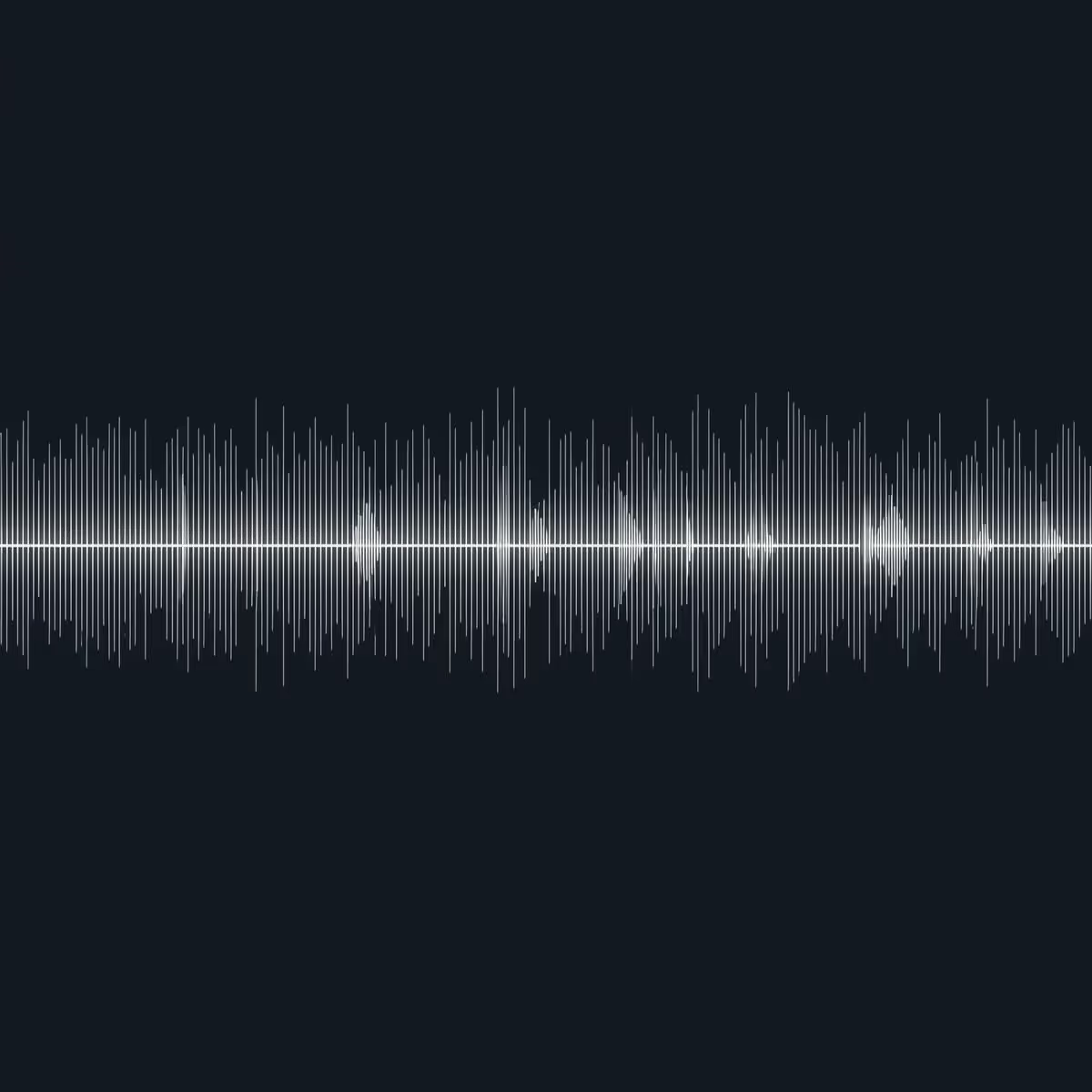
White noise waveform — equal energy across all frequencies
Equal energy across all frequencies

White Noise

Sounds like static or a hissing waterfall. Covers the full audible range equally — the broadest masking coverage. Most effective for high-pitched tinnitus in the 4–8 kHz range. Can feel harsh during long sessions.

High-pitched ringingHissing / whistlingFocus & workFree in app
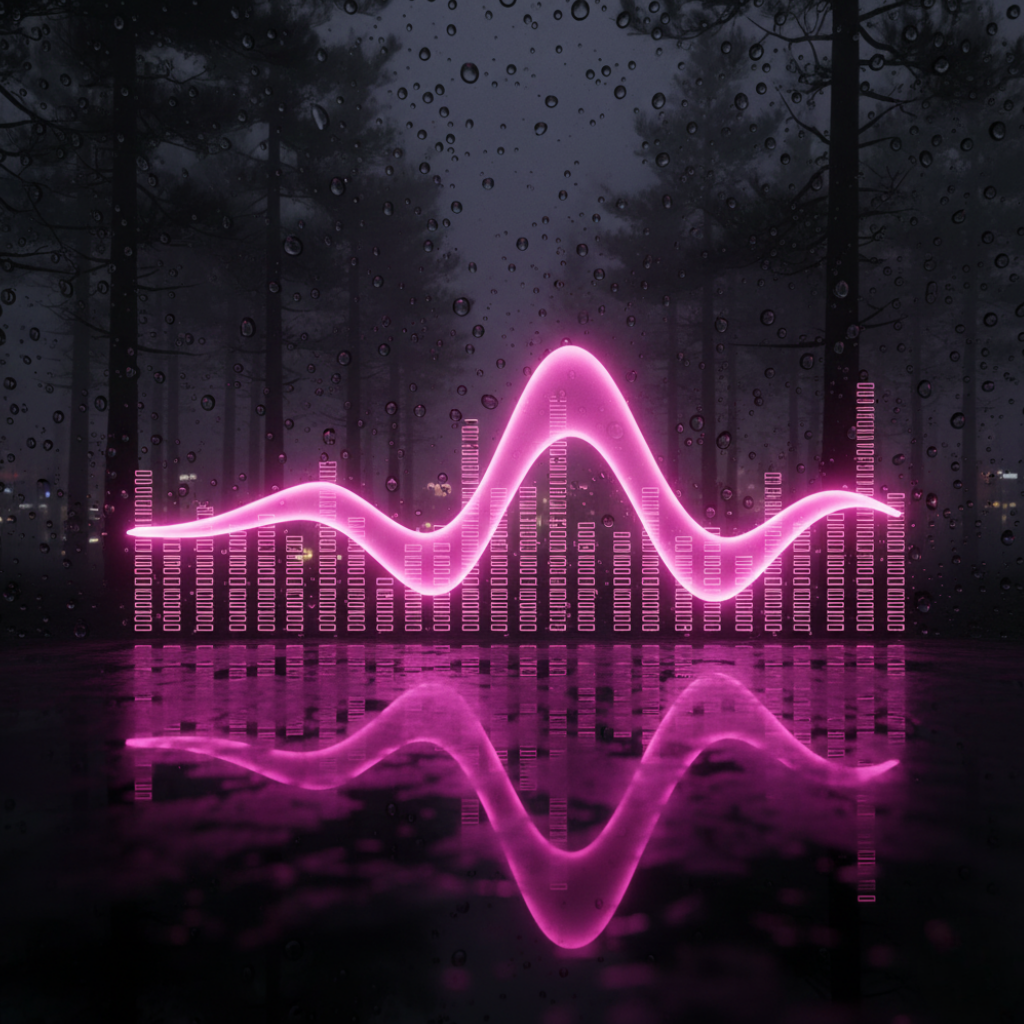
Pink noise — more energy in lower frequencies than white
More energy in lower frequencies than white

Pink Noise

Sounds like steady rainfall or a gentle waterfall. Warmer and less fatiguing than white noise for extended sessions. Many people find it the most comfortable for all-day use.

Mid-range tinnitusLong daytime useRelaxationEasier on ears
Brown noise — energy concentrated in low frequencies
Energy concentrated in low frequencies

Brown Noise

Sounds like a strong fan, distant thunder, or a running shower. Named after Brownian motion, not the colour. The most-used sound in the app at bedtime. Comfortable for sleep.

SleepLow-frequency tinnitusHumming / droningDeep relaxation
Green noise — balanced mid-range between pink and brown
Balanced mid-range — between pink and brown

Green Noise

Sounds like ambient outdoor nature — a breeze through trees, distant water. A good starting point for people who find white noise too harsh and brown noise too heavy.

All-day backgroundFirst-time usersNature feelGeneral comfort

How to Choose the Right Sound for Your Tinnitus

There is no single correct answer — personal comfort matters most. Try the player above for 60 seconds per sound before deciding. If you're unsure of your tinnitus pitch, the frequency matching guide walks you through finding it precisely.

High-pitched ringing or hissing (4–8 kHz)

Start with white noise — it has the most coverage in the upper frequency range. If it feels too harsh after 10 minutes, try pink noise instead.

Mid-range buzzing or tonal sound (1–4 kHz)

Pink noise tends to work well here — the warmer profile sits closer to where mid-range tinnitus lives. Many users also find green noise comfortable for this range.

Low-frequency humming or droning (below 1 kHz)

Brown noise is usually the best match — its heavy low-end energy competes directly with low-frequency tinnitus. Also try it if white noise seems to make your tinnitus feel worse.

For sleep specifically

Brown noise is the most popular for bedtime. Use a sleep timer with fade-out so silence doesn't jolt you awake. See our sleeping with tinnitus guide for full strategies.

For work and focus

White or pink noise works best for most people during focused work. Keep volume lower than for sleep — just enough to reduce tinnitus awareness without becoming a distraction.

Not sure where your tinnitus pitch sits

Start with green noise — it's the most neutral of the four. Then try the others over a few days. The app's frequency matching tool (100–15,000 Hz per ear) helps you identify your pitch precisely.

How Loud Should You Set It?

The partial masking principle

The most common mistake with sound therapy for tinnitus is turning the volume up too high. Full masking — where you can no longer hear your tinnitus at all — is not the goal.

Research on tinnitus habituation suggests that partial coverage works better. Your brain needs to hear both the background sound and the tinnitus signal together to begin classifying the ringing as non-threatening.

Practical rule: Set volume so your tinnitus is still faintly audible alongside the background sound — present, but less dominant. If you can't hear your tinnitus at all, turn it down slightly.

Tinnitus Relief App

Need it to keep playing during calls, sleep, and while using other apps? This browser player stops when you switch. The app doesn't. Plus 40 more sounds, per-ear frequency matching, and a sleep timer with fade-out.

Free forever No account Works offline 7-day Premium trial
QR code — iOS App StoreiOS
QR code — Android Google PlayAndroid

Every Feature, Explained

Background Play During Calls, Zoom & YouTube

Free for everyone

Your sound therapy keeps running when you take a phone call, join a meeting, open YouTube, or lock your screen. No pausing. No reconnecting. Most tinnitus apps stop the moment another app uses audio — this one does not.

  • Phone calls — sound continues throughout the call
  • Zoom, Google Meet, FaceTime, Teams — runs underneath video meetings
  • YouTube & podcasts — background audio layers underneath other media
  • Locked screen — audio does not cut when the screen goes dark

Frequency Matching Per Ear — 100 to 15,000 Hz

Free

Tinnitus has a specific pitch. The frequency dial lets you find and lock in your exact tinnitus frequency per ear — so the sounds you choose can be matched to it precisely.

  • Logarithmic scale for precise control across the full audible range
  • Independent left and right ear settings (Premium)
  • Takes about two minutes to identify your pitch
  • Guides which sounds will mask your tinnitus most effectively
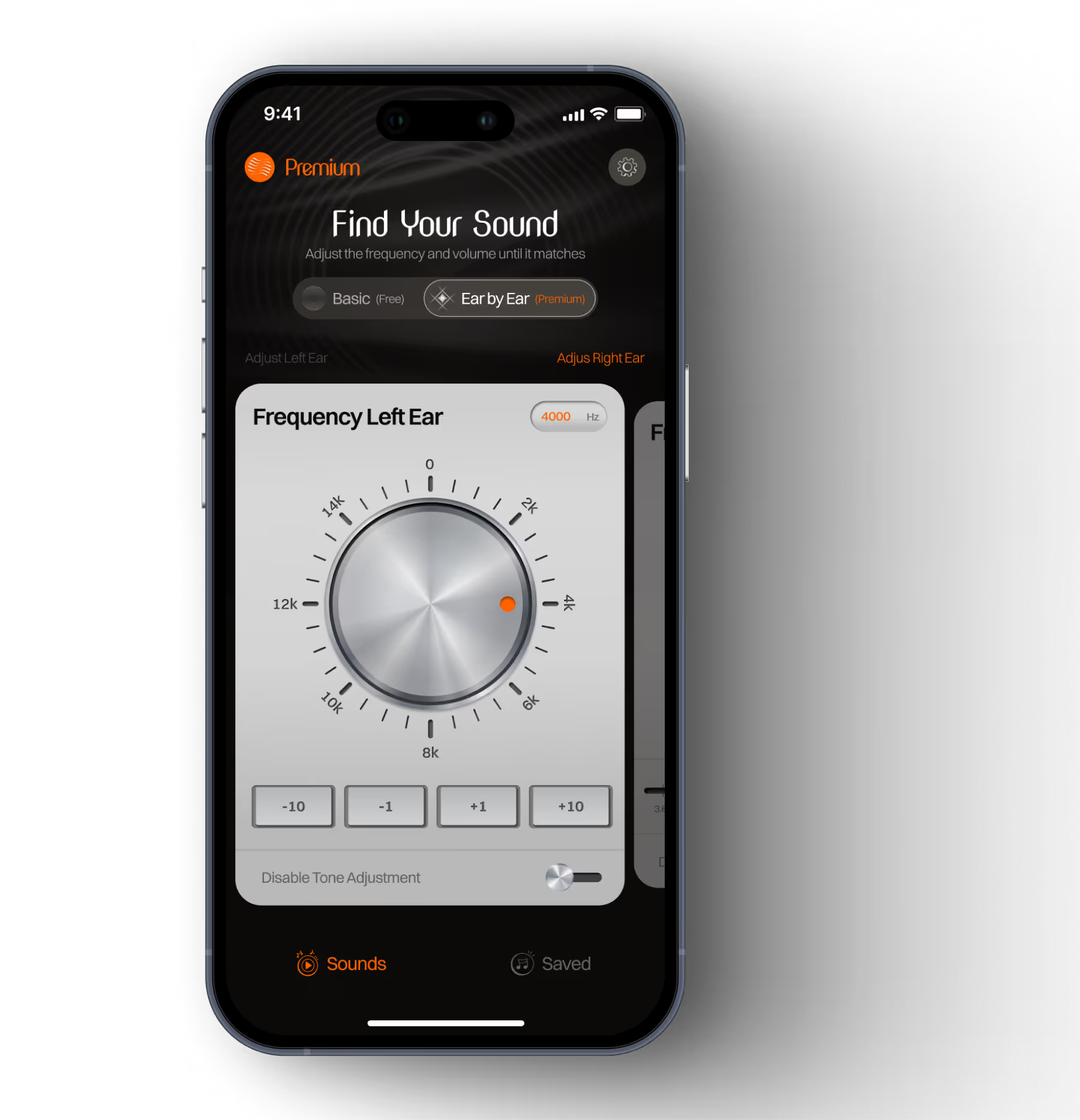
Tinnitus Relief App frequency tuning screen — dial set to find your tinnitus pitch
🎛️ Frequency tuning screen — dial in your exact pitch per ear

Sleep Timer with Auto Fade-Out

Premium

Set a timer for 30, 60, 90, or 120 minutes — or play all night. Audio fades out gradually over the final two minutes so silence does not jolt you awake when the timer ends.

  • Gradual fade — no abrupt cutoff
  • Works with any sound or layered combination
  • Continues through calls even while the timer counts down

No Account Required — Works Offline — Private by Design

Free

Open the app and start. No signup, no email, no personal data collected or transmitted. All sounds play offline — no buffering, no dropouts in flight or underground.

  • Zero personal or health data collected
  • All settings stored on your device only
  • Full offline use after initial install — works on airplane mode

All 44 Sounds in the App

The browser generator plays the 4 noise colours. The app adds 40 more — organised into 6 categories. White noise is free; everything else is Premium with a 7-day free trial.

Core Noise Colours4 sounds1 Free
White Noise
White NoiseFull spectrum masking
Pink Noise
Pink NoiseSofter, warmer
Brown Noise
Brown NoiseDeep rumble for sleep
Green Noise
Green NoiseBalanced, gentle
🌙 Sleep Favourites8 soundsPremium
Light Rain
Light RainSoft drops at night
Rain on Roof
Rain on RoofCosy indoor rain
Distant Storm
Distant StormFar-away thunder
Ocean Waves
Ocean WavesSlow rolling rhythm
Sleep Piano
Sleep PianoGentle wind-down
Cat Purring
Cat PurringLow, calming purr
Fireplace
FireplaceWarm crackling
Soft Snowfall
Soft SnowfallQuiet winter ambience
🌿 Nature & High-Pitch Masking14 soundsPremium
Night Chorus
Night Chorus6kHz frog chirps
Spring Peepers
Spring PeepersHigh frog chorus
Jungle Birds
Jungle BirdsTropical bird song
Lakeside Birds
Lakeside BirdsCalm morning lake
Deep Forest
Deep ForestLeaves, wind, birds
Rustling Leaves
Rustling LeavesGentle leaf rustle
Forest River
Forest RiverFlowing water
Waterfall
WaterfallStrong rush masking
Sea Shore
Sea ShoreGentle seaside waves
Atlantic Waves
Atlantic WavesDeep ocean immersion
Whale Song
Whale SongDeep ocean calls
Night Owl
Night OwlSoft owl calls
Rainforest
RainforestTropical rain + wildlife
Heavy Storm
Heavy StormMaximum coverage
🏙️ Mechanical & Urban8 soundsPremium
Bedroom Fan
Bedroom FanFamiliar hum
Laundry Room
Laundry RoomRhythmic tumble
Cabin Noise
Cabin NoiseAirplane hum
Inside Car
Inside CarRoad cabin noise
Highway Drive
Highway DriveSteady road hum
Distant Train
Distant TrainFaraway passing
City Ambience
City AmbienceSoft city hum
Café Buzz
Café BuzzWarm chatter for focus
🎵 Soft Musical & 🧠 Advanced Therapy10 soundsPremium
Classic Calm
Classic CalmGentle classical
Harp Tones
Harp TonesLight harp notes
Wind Chimes
Wind ChimesGentle tonal drifts
Singing Bowl
Singing BowlDeep resonant tone
40 Hz Binaural
40 Hz BinauralUse with headphones
Theta Pulses
Theta Pulses5 Hz deep relaxation
Alpha Pulses
Alpha Pulses8 Hz calm alert
Heartbeat
HeartbeatSlow grounding beat
396 Hz Tone
396 Hz TonePure tone therapy
Immersed
ImmersedDeep ambient reset
<
🎯

Not sure which sound is right for you?

Answer 5 quick questions about your tinnitus — pitch, timing, and what bothers you most — and get a personalised sound recommendation with settings to try.

Take the sound finder quiz →
📊

How much is tinnitus affecting you?

Take a free 2-minute self-assessment inspired by the clinically validated THI questionnaire. Get your score and personalised next steps.

Take the self-assessment →

Get Started in 3 Simple Steps

From first download to your first session of relief — setup takes under three minutes.

Download the app — free

Available on iOS App Store and Google Play. No account, no signup. Open it and the app is ready immediately. White noise and background play are free forever.

Find your frequency and choose a sound

Use the frequency matching dial to identify your tinnitus pitch (100–15,000 Hz). Then browse the sound library and try the noise colour that best matches your pitch. The frequency matching guide walks you through it in two minutes.

Set your volume and let it run

Set volume to partial masking level — tinnitus still faintly audible. Take a call, open YouTube, lock your screen. The sound keeps playing. For sleep, set a timer with auto fade-out. Read our sleeping with tinnitus guide for full bedtime strategies.

Frequently Asked Questions

No. There is currently no universal cure for tinnitus. Tinnitus Relief App is a sound management tool — it helps reduce awareness of the ringing, support sleep, and make quiet environments more manageable. Some people report meaningful improvement in daily quality of life with consistent use. Individual results vary significantly. Consult a qualified healthcare professional if you have concerns.
Many users report reduced tinnitus awareness within the first session — especially during sleep or in quiet environments. Deeper habituation typically takes weeks to months of consistent use. Using the app during activities where tinnitus is most disruptive tends to yield the fastest improvement in day-to-day experience.
Sound therapy is most commonly used for subjective tinnitus — the kind only you can hear — including high-pitched ringing, hissing, buzzing, and humming. It is less suitable for pulsatile tinnitus (a rhythmic sound that pulses with your heartbeat), which should be evaluated by a healthcare professional.
It depends on your tinnitus pitch. White noise suits high-pitched ringing (4–8 kHz). Pink noise is warmer and works well for mid-range tinnitus. Brown noise is deepest and most popular for sleep and low-frequency humming. Green noise is the most neutral starting point. Try each for 60 seconds — personal comfort is the most reliable guide.
Set the volume so your tinnitus is still faintly audible alongside the background sound — present but less dominant. Full masking is not the goal. Your brain needs to hear both signals together to begin reducing its response to the ringing. Never set volume louder than conversational speech level.
Yes — this is the app's defining feature. The sound continues playing during phone calls, Zoom, FaceTime, YouTube, and when your screen is locked. Background play is free for all users. The browser generator on this page stops when you switch apps; the app does not.
The core app is free. Free features include white noise, background play during calls and meetings, and frequency matching. Premium ($49.99/year with a 7-day free trial) unlocks all 44 sounds, the sleep timer with auto fade-out, independent per-ear frequency control, and unlimited saved presets. No account required.
Sound therapy is a non-invasive approach widely used in tinnitus management. Use at a comfortable volume — never louder than conversational speech. If you experience new, sudden, worsening, or one-sided tinnitus, pulsatile tinnitus, or tinnitus with hearing loss or dizziness, consult a qualified healthcare professional. Individual responses vary.

Ready for quieter nights and calmer days?

Download free. Start with white noise and background play. If you want 44 sounds and a sleep timer, the 7-day Premium trial is included — no commitment needed.

Free forever No account needed Works offline Background play during calls 7-day Premium trial
References & Sources World Health Organization. World Report on Hearing. Geneva: WHO, 2021.
National Institute on Deafness and Other Communication Disorders (NIDCD). Tinnitus. U.S. Department of Health & Human Services.
Cima R.F.F. et al. "Tinnitus." Nature Reviews Disease Primers. 2019;5(1):70. doi:10.1038/s41572-019-0124-8
Baguley D., McFerran D., Hall D. "Tinnitus." The Lancet. 2013;382(9904):1600–1607.
Langguth B. et al. "Tinnitus: causes and clinical management." The Lancet Neurology. 2013;12(9):920–930.
Jastreboff P.J. "Phantom auditory perception (tinnitus)." Neuroscience Research. 1990;8(4):221–254.
Tyler R.S. et al. "Update on Tinnitus Retraining Therapy." Frontiers in Systems Neuroscience. 2020;14:38.
MDPI Healthcare. THI score improvements in self-directed sound therapy cohorts. 2021–2023.